Standard evacuation plans often fail because they lack flexibility. This resource utilizes the PACE system—Primary, Alternate, Contingency, and Emergency—to create a multi-layered strategy for leaving a location during critical events. By moving beyond a single exit point, you establish a resilient framework that accounts for blocked roads, infrastructure failure, and rapid environmental changes. Effective emergency management requires more than just a destination; it necessitates a deep understanding of route risks and logistics. You will find practical instructions for integrating risk assessment tools with physical mapping techniques, ensuring that your preparations are grounded in reality rather than guesswork.
What's inside
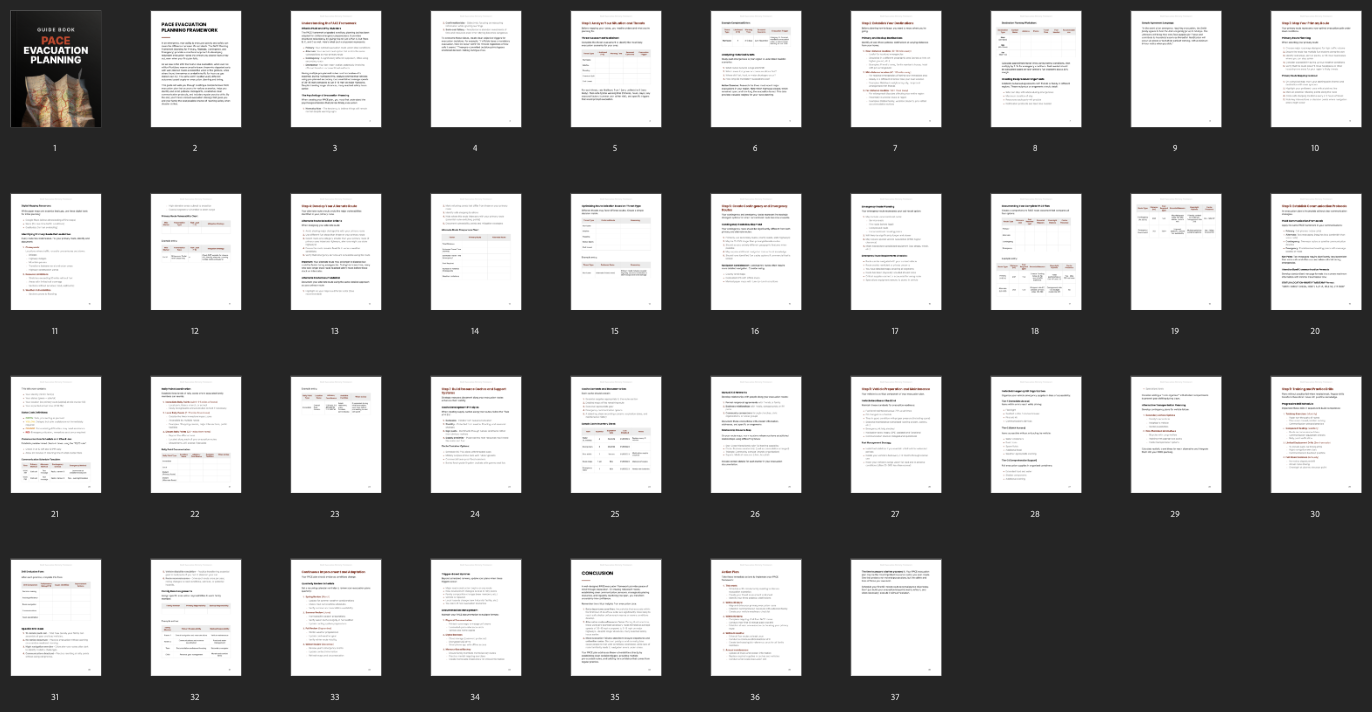
- PACE system fundamentals and safety application
- Protocols for developing primary and alternate evacuation routes
- Frameworks for contingency and emergency path planning
- Navigation mapping techniques and essential route supplies
- Risk assessment tools for hazard identification
- Communication strategies for maintaining contact during transit
This guide is designed for individuals and families who need a reliable, adaptable safety strategy. By applying this proven framework to their specific environment, users can move from basic awareness to high-level readiness with actionable plans for any scale of emergency.