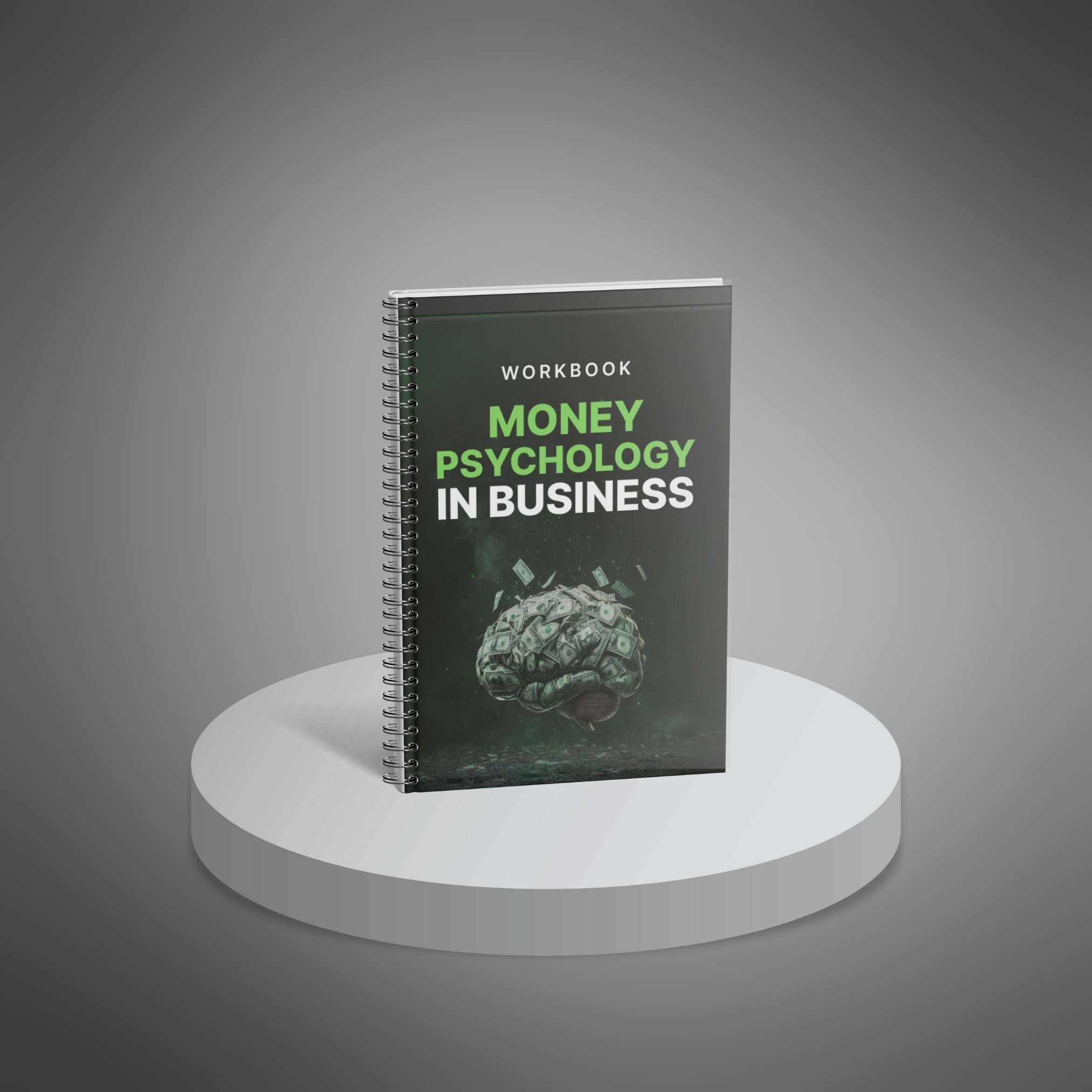
Financial success in business often depends more on behavioral habits and cognitive patterns than on technical accounting skills. This workbook provides a structured environment to analyze how personal money habits and psychological biases influence commercial outcomes.
What's inside
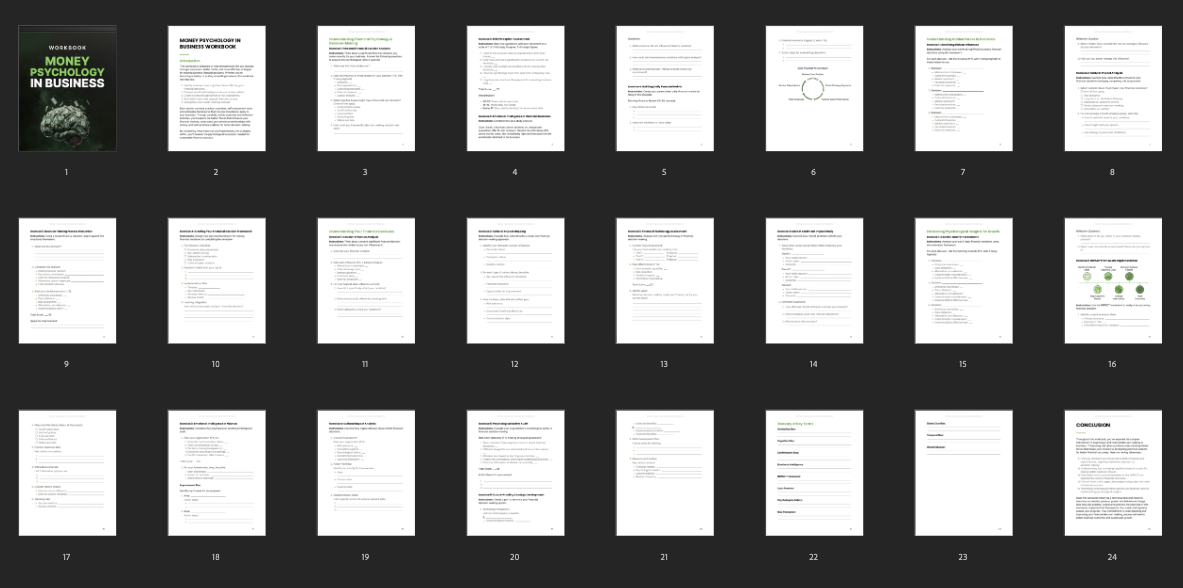
- Skill-building exercises to analyze financial habits and risk assessment
- Real-world case studies for applying financial psychology to business scenarios
- Decision-making frameworks designed to intercept and correct cognitive biases
- Guided reflection self-assessments for tracking behavioral changes over time
Entrepreneurs and business owners can use these frameworks to develop more resilient money habits. Transitioning from reactive to structured financial thinking allows for more consistent growth and reduced exposure to avoidable risks.